A QR-based emergency medical ID with two access tiers: an unauthenticated emergency subset any bystander can read, and the full record behind a hospital code.
Overview
Situation
In an emergency, the person who can explain a patient's medical history is often the one who cannot speak. Blood type, allergies, current medications, and pre-existing conditions are exactly what a first responder needs in the first minutes, and exactly what is locked inside a records system nobody at the scene can reach.
The opposite risk is just as real: making that information available to anyone who finds a phone is not a safe answer either.
Task
Design an access flow where a stranger at the scene can get the information that saves a life, a verified clinician can get the full record, and neither path exposes more than it should.
Action
I designed MedBand around a QR code carried on the patient, opening a web page rather than an app, so a responder needs nothing installed.
The flow splits by who is asking:
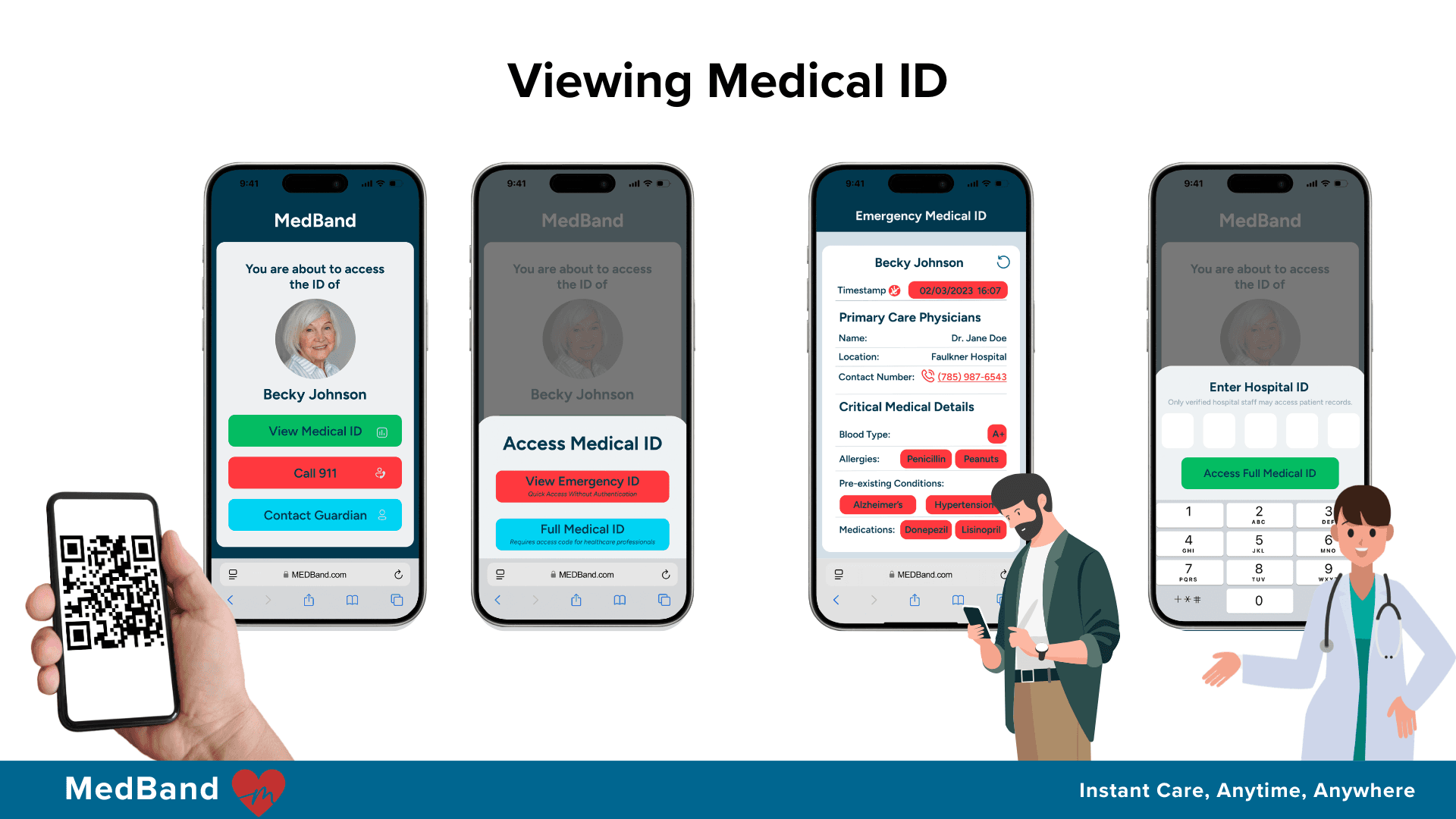
- Anyone scanning sees the patient's name and photo, with three actions: view the medical ID, call 911, or contact the guardian.
- A bystander can open the emergency ID with no authentication: blood type, allergies, pre-existing conditions, current medications, and the primary care physician's name, hospital, and phone number, each timestamped.
- Verified hospital staff enter an access code to unlock the full medical record, gated behind a numeric keypad on the same page.
The two tiers are the whole design. Making the emergency subset free of authentication is what makes it useful in the seconds that matter; putting the complete record behind a hospital ID is what makes carrying the code acceptable at all.
Result
A design that answers the question every emergency records concept runs into: how to be open enough to help a stranger and closed enough to trust, without asking the patient to choose in advance.